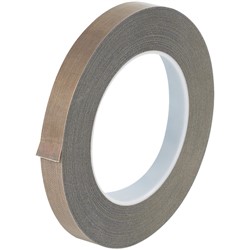
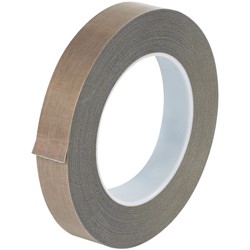
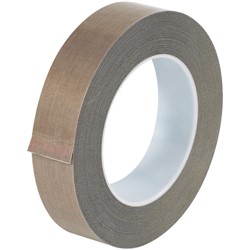
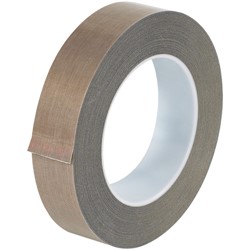
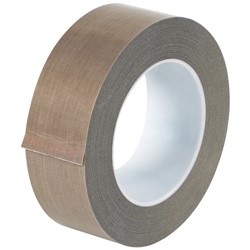
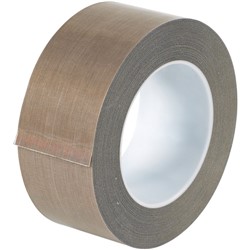
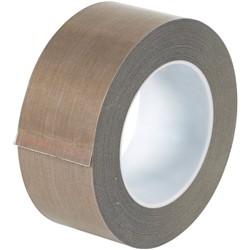
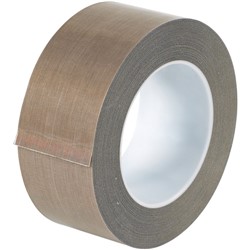
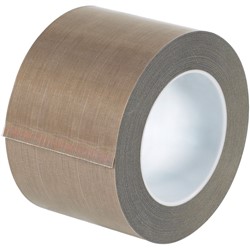
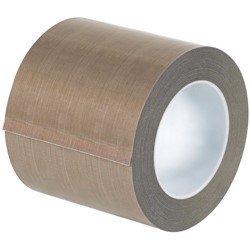
PTFE Glass Cloth Tape for Heat, Wear and Low-Friction Surfaces
PTFE glass cloth tape combines a woven glass reinforcement with a PTFE surface and pressure-sensitive adhesive. The construction is useful where a thin film alone may not provide enough dimensional stability or wear resistance, including heat-sealing equipment, process rollers, chutes and demanding release-surface applications.
Choose Construction for the Mechanical Demand
Glass reinforcement helps the tape resist stretching and adds strength across moving or repeatedly contacted surfaces. Thinner constructions minimize buildup around bars, rollers and guides; heavier constructions can provide more cushioning and resistance to abrasion. Total thickness includes the backing and adhesive, so compare total construction—not film thickness alone—when clearance or edge transitions matter.
PTFE provides a low-friction, release-oriented surface, but performance still depends on the exact tape, load and process. Compare maximum and continuous operating temperature, adhesive chemistry, tensile strength, elongation, dielectric properties, chemical exposure and wear life for the product under consideration. Polyimide tape may be a better fit when a thinner electrical-insulation or precision-masking construction is the priority.
Install for Smooth Contact and Predictable Release
Clean the substrate of oil, dust, release agents and old adhesive, then allow it to dry. Apply the tape with firm, even pressure and avoid trapping air or creating wrinkles that can catch product, concentrate wear or interrupt heat transfer. On rollers or curved components, plan the overlap and direction so moving material does not continually strike a lifted edge.
Validate the completed installation at the actual temperature, dwell time, pressure, line speed and cleaning cycle. Inspect the tape for edge lift, glazing, cuts, adhesive movement and surface wear, and establish a replacement interval from the process rather than waiting for failure.
Frequently Asked Questions
How is PTFE glass cloth tape different from polyimide tape?
Glass cloth adds reinforcement and wear resistance, while polyimide film is generally chosen for a thinner, more conformable electrical-insulation or masking layer.
Does thicker tape always last longer?
No. Wear pattern, surface preparation, heat, pressure, edge exposure and tape construction all affect service life.
Can it be applied over worn tape?
Removing damaged material and adhesive usually provides a smoother, more reliable installation than layering over a failing surface.
What should I test before standardizing it?
Test temperature, dwell, pressure, line speed, substrate condition, release behavior, abrasion and the intended cleaning method together.
Matching PTFE Glass Cloth Tape to a Process?
We can help compare thickness, reinforcement, adhesive and roll dimensions for the equipment and operating conditions.
Contact Packaging HERO
.webp)