.webp)
 Corrugated Sheets
Corrugated Sheets & Pads


No Result Found
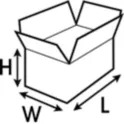
Search by Size:
No Result Found
Sheets and pads create surfaces between products, pallet decks and stacked layers. Corrugated, plastic corrugated, honeycomb and chipboard formats serve different needs for separation, stiffness, moisture exposure and thickness. Choose the material from the load and handling environment rather than treating every flat sheet as interchangeable. A bottom sheet can help separate goods from a pallet surface, while an interlayer can organize tiers and distribute contact across a broader area. Some packs need a thin divider; others need a stiffer panel or a moisture-tolerant surface. Measure the supported footprint and avoid sheet overhang that can snag or interfere with stretch wrapping. For conventional fiber-based separation, compare corrugated layer pads. Confirm thickness, flute or cell construction, surface condition and dimensions for the exact item before substituting one material for another. Layer pads can improve organization and surface separation, but they do not make an unstable stack safe. Carton strength, product rigidity, pallet condition, tier pattern, load height, stretch film and handling equipment all affect performance. Check whether smooth sheets could slide and whether rough edges could mark the product. Keep fiber products dry unless their documentation supports the expected exposure. Inspect reusable plastic sheets for cracks, contamination and damaged edges. Neither material name nor thickness provides a universal load-capacity rating, so test representative palletized loads and follow facility and carrier requirements. Placement often defines the role: a sheet may cover the pallet or load, while a layer pad separates tiers. Confirm the exact construction. It should support the intended product footprint without problematic overhang or uncovered load areas. Do not assume a blanket rating. Verify the exact material, edges and cleaning process for the expected exposure. Not by themselves. Validate the entire pallet, products, stacking pattern, restraint and handling system. Packaging HERO can help you compare sheet material, dimensions, stiffness and unit-load conditions.
Pallet Sheets and Layer Pads for Separation and Load Organization
Start With the Job the Sheet Must Perform
Validate the Complete Unit Load
Sheet and Pad Format Comparison
Format
Useful For
Verify
Corrugated sheets or pads
General separation, covering and tier organization
Flute, thickness and moisture conditions
Plastic corrugated sheets
Reusable or moisture-prone workflows
Cleanliness, stiffness and return process
Honeycomb sheets or runners
Higher stiffness or load-spreading structures
Construction and tested system performance
Chipboard sheets
Thin dividers, backing and surface protection
Caliper, rigidity and edge protection
Pallet Sheets & Layer Pads FAQs
What is the difference between a pallet sheet and a layer pad?
Should the sheet match the pallet footprint?
Are plastic corrugated sheets waterproof?
Do layer pads increase a pallet’s safe load?
Need Help Choosing Pallet Sheets & Layer Pads?
