.webp)
Aluminum Foil Tapes


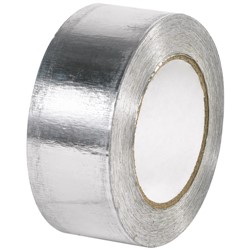
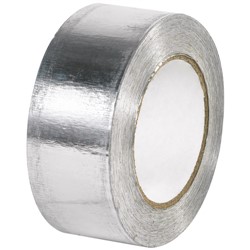
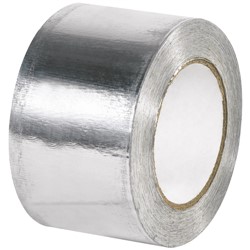
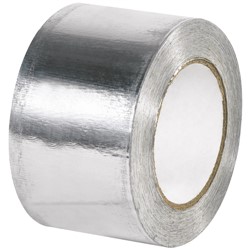
Aluminum foil tape pairs a metallic foil backing with pressure-sensitive adhesive for compatible HVAC, insulation, appliance, fabrication and maintenance applications. Unlike temporary high-temperature masking films, foil tape is commonly selected to remain in place as a conformable seal, patch or reflective facing. Foil backing conforms over seams and irregular surfaces while providing a metallic surface that can reflect radiant heat and resist moisture transmission in suitable assemblies. Tape width should bridge the joint with enough contact area on both sides. Wider tape can improve coverage on broad seams, but it also demands more care to avoid wrinkles and trapped air. Do not select foil tape from appearance alone. Compare backing and total thickness, adhesive type, adhesion, service and application temperatures, liner, outdoor exposure, flame or smoke classifications and any industry approvals required for the job. A general-purpose foil tape should not be represented as meeting a code, listing or specification unless the exact product documentation confirms it. Remove dust, oil, oxidation, loose insulation fibers and condensation before application. The surface must be dry and within the tape’s application-temperature range. Center the tape over the seam, peel the liner gradually when present and use firm squeegee or roller pressure to create full contact without puncturing the foil. Smooth wrinkles and seal edges because small channels can interrupt a vapor or air-control layer. For repairs, address the source of moisture, movement or damage before taping over it. Validate the finished assembly under representative temperature cycling, vibration and exposure, especially where failure would affect insulation performance or indoor-air control. No. Foil tape uses a metallic backing; duct tape typically uses a reinforced cloth-style backing with different conformability and exposure characteristics. No. Confirm the exact tape is suitable for the duct material, temperature, environment and any required code, listing or specification. Removing too much liner at once, applying without tension control or bridging an uneven surface can trap air and create folds. The underlying leak, contamination or structural damage should be corrected first; adhesive tape needs a clean, dry, sound substrate. We can help compare width, construction and documented performance for the surface and service environment.Aluminum Foil Tape for Sealing, Patching and Insulation Work
Match the Foil and Adhesive to the Joint
Surface Preparation Determines Seal Quality
Frequently Asked Questions
Is aluminum foil tape the same as duct tape?
Can any foil tape be used on HVAC ductwork?
Why does foil tape wrinkle during application?
Can foil tape repair a wet or damaged surface?
Need Foil Tape for a Specific Assembly?
