.webp)
AirWave Air Cushion Packaging Systems
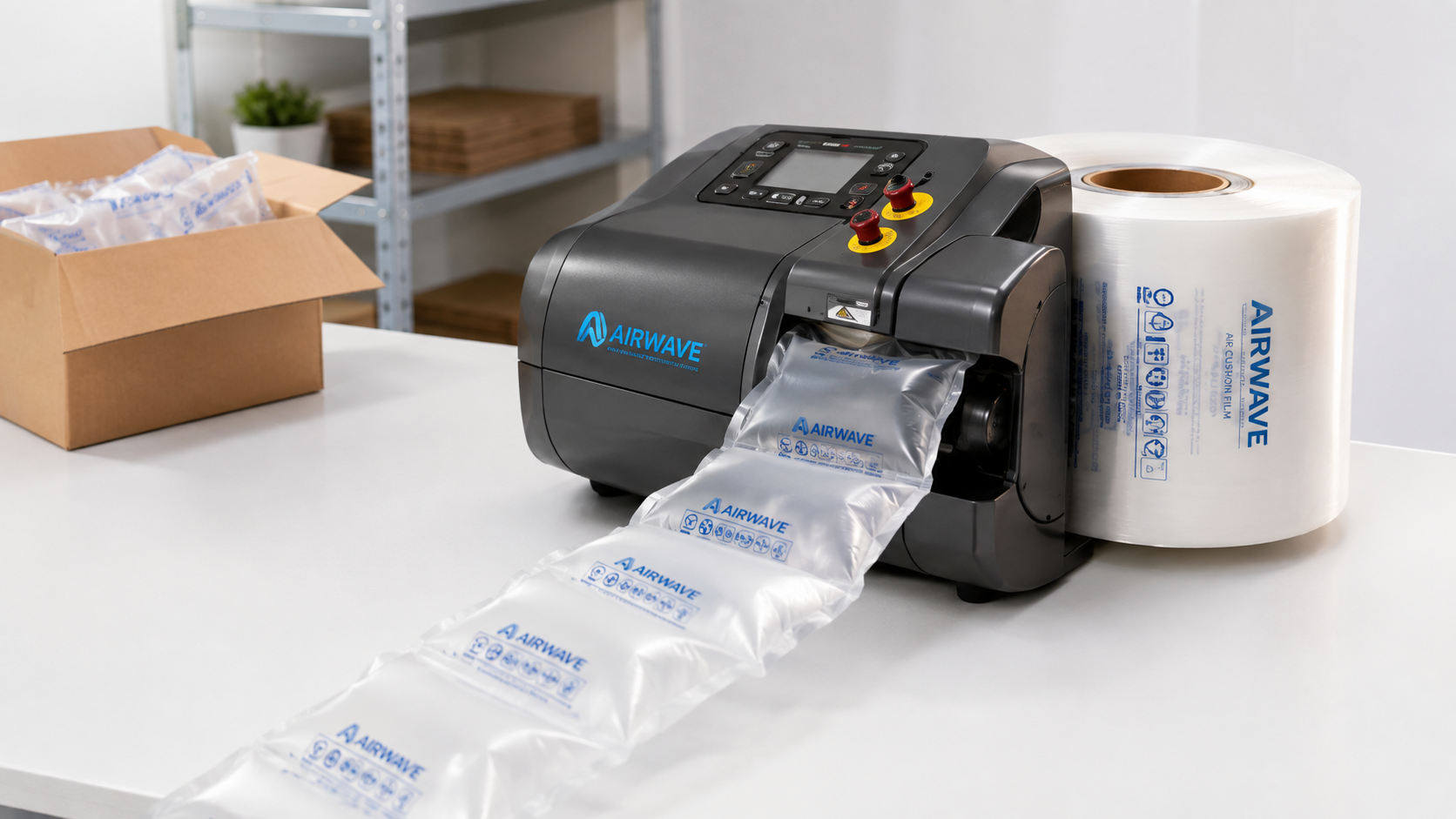
AirWave specializes in on-demand air cushion packaging systems designed to create protective packaging directly at the pack station. Their equipment and films can produce lightweight air pillows for void fill as well as larger cushion formats for wrapping, separation, and product protection.
At Packaging HERO, AirWave often becomes part of the conversation when an operation wants to reduce storage space devoted to bulky protective materials, improve consistency between packers, or create a faster and more controlled pack-out process.
Where AirWave Fits in a Packaging Operation
In many fulfillment environments, protective packaging takes up more warehouse and pack-station space than expected. Pre-expanded cushioning materials can be bulky to store, while inconsistent manual packing methods can lead to too much material in one carton and too little in another.
AirWave addresses that part of the operation by producing air cushions from compact rolls of material as they are needed. Depending on the cushion format, the system can create air pillows for filling open carton space or larger air-cell structures used to wrap, separate, and protect products during shipment.
How Packaging HERO Evaluates Air Cushion Packaging
An air cushion machine should not be selected only by how quickly it can make cushions.
We look at the full pack-out process, including product size and weight, fragility, carton dimensions, typical void space, shipping method, daily package volume, number of packing stations, and the protective material being used today.
For some applications, lightweight air pillows are an efficient way to control product movement and fill open carton space. Other products may need wrapping, heavier cushioning, paper, foam, or a combination of protective materials. The goal is to match the packaging method to the shipment rather than simply adding more material.
We look at the full pack-out process, including product size and weight, fragility, carton dimensions, typical void space, shipping method, daily package volume, number of packing stations, and the protective material being used today.
For some applications, lightweight air pillows are an efficient way to control product movement and fill open carton space. Other products may need wrapping, heavier cushioning, paper, foam, or a combination of protective materials. The goal is to match the packaging method to the shipment rather than simply adding more material.
Why Companies Consider AirWave
On-Demand Protection
AirWave systems create protective packaging when it is needed instead of requiring large quantities of pre-expanded void fill to be stored around the packing operation.
Pack Station Efficiency
Producing cushioning at or near the point of use can help reduce material handling, keep protective packaging accessible to the packer, and create a more repeatable packing process.
A Practical Option for Lower-Volume Operations
AirWave systems can be a good fit for smaller shipping operations that want the benefits of on-demand air cushioning without needing a large automated packaging setup. Select AirWave machine can be purchased outright, allowing lower-volume users to add an air cushion system at a single pack station and scale as their needs grow.
Protective Packaging Approaches with AirWave
Air Pillow Void Fill
Air pillows are designed to occupy open space inside a shipping carton and help limit unnecessary product movement. They can be produced as needed from compact rolls of uninflated material.
Air Cushion Wrapping
Larger air-cell and cushion formats can provide additional surface protection, separation, or wrapping for compatible products that need more than basic void fill.
Integrated Packing Systems
AirWave equipment can be used at individual workstations or incorporated into broader packing-station and fulfillment workflows where protective packaging needs to be supplied efficiently to multiple packers.
AirWave Equipment for Different Packing Volumes
AirWave offers equipment ranging from compact Nano systems for smaller or mobile packing stations to AirWave machines designed for routine fulfillment use and higher-output industrial applications.
The important distinction is not simply machine size. A system should be selected around the amount of protective packaging being produced, the cushion formats required, the number of employees or stations being supplied, and how the equipment needs to fit into the existing workflow.
The important distinction is not simply machine size. A system should be selected around the amount of protective packaging being produced, the cushion formats required, the number of employees or stations being supplied, and how the equipment needs to fit into the existing workflow.
Material & Sustainability Considerations
AirWave offers multiple film constructions and protective packaging formats for different operating requirements. Options include standard films as well as recycled-content, antistatic, heavy-duty, and alternative-material solutions.
AirWave also offers options such as PaperWave and home-compostable materials for operations evaluating alternatives to conventional air cushion films. As with any packaging material, the best choice depends on product protection requirements, equipment compatibility, shipping conditions, and the customer's sustainability goals.
AirWave also offers options such as PaperWave and home-compostable materials for operations evaluating alternatives to conventional air cushion films. As with any packaging material, the best choice depends on product protection requirements, equipment compatibility, shipping conditions, and the customer's sustainability goals.
Common AirWave Use Cases
Ecommerce & Parcel Fulfillment
Fast-moving shipping operations can produce void fill as orders are packed rather than continually storing and replenishing bulky pre-expanded protective materials.
Warehouse Space Reduction
Compact rolls of uninflated material can reduce the storage footprint associated with ready-to-use protective packaging and help keep packing areas more organized.
Pack Station Standardization
Operations trying to reduce variation from one packer to another can use on-demand cushioning as part of a more standardized protective packaging process.
Choosing the Right AirWave System
The best AirWave setup depends on more than shipment volume. Product characteristics, carton sizes, available floor and workstation space, cushion format, packer workflow, and the amount of material needed during peak periods all affect the recommendation.
Packaging HERO can evaluate the current packing process first, then determine whether air pillows, air cushion wrapping, another protective packaging method, or a combination of materials provides the best balance of protection and operating efficiency.
Looking to reduce protective packaging storage, improve pack station consistency, or evaluate an on-demand air cushion system? Packaging HERO can help determine whether AirWave equipment and cushioning materials are the right fit for your products, shipping volume, and packing operation.
