.webp)
Pregis Protective Packaging Solutions
Pregis is widely recognized for protective packaging systems that help companies cushion products, fill empty space in cartons, and reduce shipping damage. These solutions are commonly used in ecommerce fulfillment, warehouse shipping departments, and manufacturing operations where products must arrive safely and consistently.
At Packaging HERO, we often bring systems like Pregis into the conversation when customers begin experiencing recurring shipping damage, inconsistent packing methods, or pack stations that struggle to keep up with shipping volume. Protective packaging systems allow packing teams to create cushioning or void fill directly at the pack station so products are protected consistently without slowing the workflow.
Where Pregis Fits in a Packaging Operation
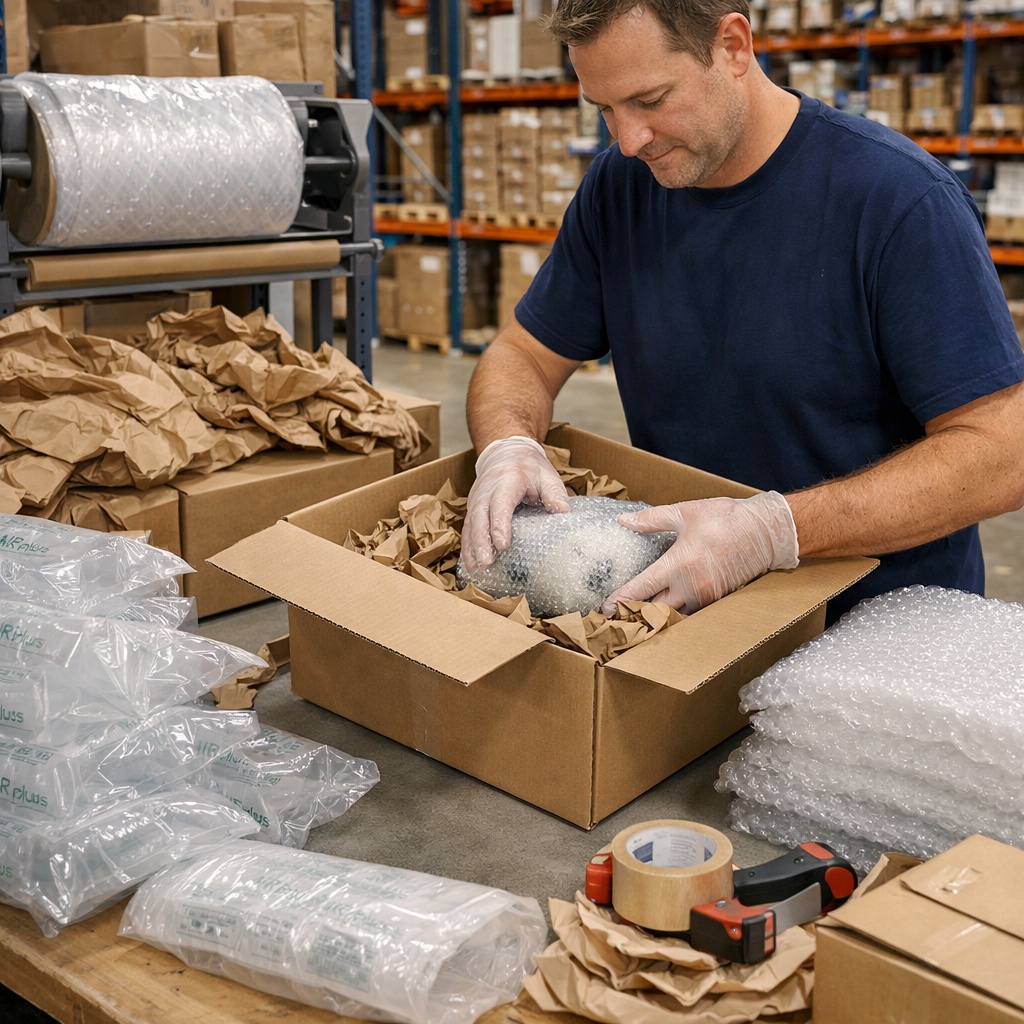
Many shipping operations start with loose protective materials such as bubble wrap, hand-crumpled paper, or whatever happens to be nearby at the pack station. While those methods can work, they often create inconsistent protection, slower packing speeds, and more variation from one employee to the next.
Protective packaging systems change how the pack station operates. Instead of relying on loose materials, packing teams can create cushioning or void fill as needed, directly at the station. That helps standardize packing methods, improve efficiency, and create a more repeatable protective packaging process.
How Packaging HERO Evaluates Protective Packaging Systems
Protective packaging systems are rarely installed without a reason. Most conversations begin when a company starts seeing patterns such as product damage in transit, cluttered pack stations, inconsistent packing methods, or too much time spent building protective packaging by hand.
When those issues appear, we evaluate the product being shipped, how much empty space is typically in the carton, the speed of the fulfillment process, and the type of protection required. Based on those factors, solutions like Pregis may become part of the discussion when the goal is to improve both product protection and operational consistency.
When those issues appear, we evaluate the product being shipped, how much empty space is typically in the carton, the speed of the fulfillment process, and the type of protection required. Based on those factors, solutions like Pregis may become part of the discussion when the goal is to improve both product protection and operational consistency.
Protective Packaging Approaches with Pregis
Air Pillow & Void Fill Systems
Inflatable air cushions are used to fill empty space inside the carton and help prevent products from shifting during shipment. These systems are often a strong fit in fast-moving fulfillment environments.
Paper Cushioning
Paper-based protective packaging can be used for cushioning and void fill when operations want structured paper protection and a packaging approach that fits paper-based workflows.
Foam Cushioning
Foam-based protective packaging may be used when products need a higher level of cushioning or when the item being shipped benefits from more secure, molded protection.
Protective Mailers
Protective mailing bags help combine flexible packaging with cushioning, making them useful when products can ship safely without a full corrugated carton.
Why Companies Consider Pregis
Damage Reduction
Pregis often comes into the conversation when companies are trying to reduce product damage caused by movement, impact, or inconsistent in-box protection during shipping.
Pack Station Efficiency
Creating protective packaging on demand helps reduce clutter at the pack station and gives teams a more consistent way to pack orders at speed.
Scalable Packaging Processes
Protective packaging systems become especially relevant when an operation needs to move from ad hoc packing methods to a more standardized and repeatable workflow.
Common Pregis Use Cases
Ecommerce Fulfillment
High-volume parcel shipping operations often rely on protective packaging systems to maintain speed and consistency at the pack station.
Fragile Product Shipping
Products that can shift, chip, or break during shipment benefit from cushioning and void fill that helps hold them in place inside the carton.
Mail-Ready Product Protection
Protective mailers can be a fit when products do not require a full box but still need cushioning and protection in parcel shipping.
Pack Station Standardization
Companies often evaluate Pregis when they need to make protective packaging more consistent from one packer to the next.
Trying to reduce shipping damage or improve pack station efficiency? Packaging HERO can help evaluate whether Pregis protective packaging solutions are the right fit for your operation and how they fit into your packaging workflow.
