.webp)
Sealed Air Protective Packaging Systems
Sealed Air is one of the best-known names in protective packaging, with solutions ranging from on-demand inflatable cushioning and paper void fill to Instapak® foam, automated bagging, and advanced packaging equipment.
At Packaging HERO, Sealed Air becomes especially relevant when the packaging challenge extends beyond choosing a material. Their range allows us to look at product protection, pack station efficiency, labor, material usage, throughput, and automation as parts of the same packaging process.
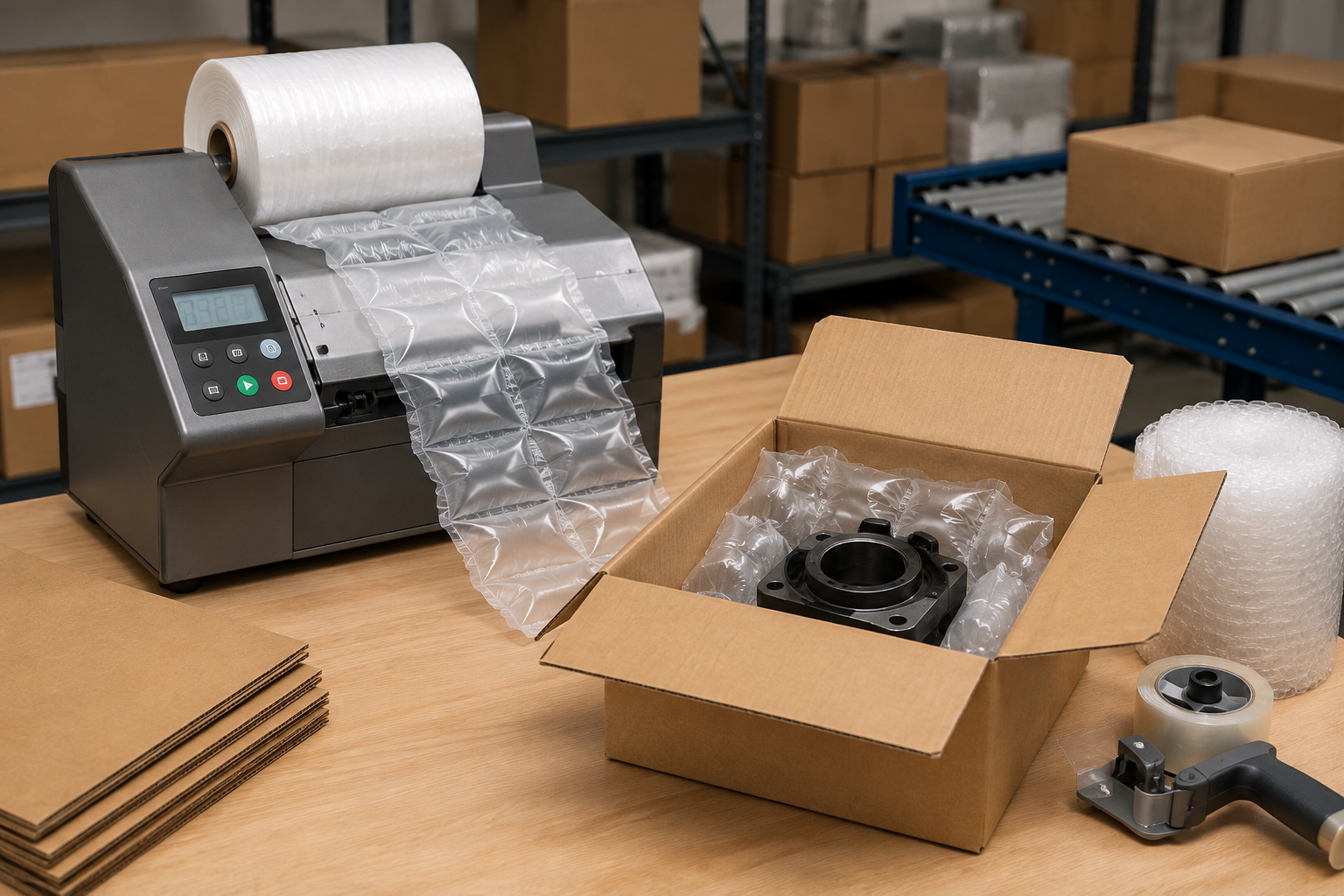
Where Sealed Air Fits in a Packaging Operation
Protective packaging problems rarely come from one source. A product may be arriving damaged, but the underlying issue could involve too much open space in the carton, inconsistent cushioning, excessive material usage, slow packing, or a process that depends too heavily on individual packer judgment.
Sealed Air fits into that broader discussion because its protective packaging portfolio includes materials, equipment, and automation. That allows a solution to be evaluated around the entire pack-out process rather than simply replacing one cushioning material with another.
How Packaging HERO Evaluates Protective Packaging
We start with the shipment, not the machine or material.
That means looking at product weight and fragility, carton dimensions, damage history, shipping method, void space, daily package volume, available pack-station space, labor requirements, and how consistently the current packaging method is being applied.
From there, we can determine whether the operation needs simple void fill, more substantial cushioning, blocking and bracing, a more standardized dispensing system, or a higher level of automation.
That means looking at product weight and fragility, carton dimensions, damage history, shipping method, void space, daily package volume, available pack-station space, labor requirements, and how consistently the current packaging method is being applied.
From there, we can determine whether the operation needs simple void fill, more substantial cushioning, blocking and bracing, a more standardized dispensing system, or a higher level of automation.
Why Companies Consider Sealed Air
Broad Protective Packaging Range
Sealed Air supports multiple protective approaches, including inflatable cushioning, paper void fill and cushioning, polyethylene foam, Instapak® foam, and other specialized packaging formats.
Solutions That Can Scale
The portfolio ranges from compact pack-station systems to higher-output equipment and automation, making Sealed Air relevant across very different fulfillment volumes and operating environments.
Packaging Automation
Sealed Air extends beyond material dispensing into automated bagging, paper insertion, void sensing, carton optimization, and other systems designed to improve throughput and reduce manual variability.
Protective Packaging Approaches with Sealed Air
On-Demand Inflatable Packaging
BUBBLE WRAP® brand inflatable systems can produce air pillows for void fill as well as inflatable cushioning used to wrap and protect compatible products during shipment.
Paper Void Fill & Cushioning
Sealed Air paper systems can create void fill, cushioning, blocking, and bracing using kraft paper, with equipment options ranging from compact pack-station systems to automated dispensing.
Instapak® Foam Packaging
Instapak® foam expands on demand to create protective cushioning around a product, making it especially relevant for irregular, fragile, valuable, or difficult-to-protect items.
From Individual Pack Stations to Packaging Automation
One of Sealed Air’s strengths is the ability to address packaging at very different levels of automation. A smaller operation may need a compact paper or inflatable system at a single workstation, while a larger fulfillment environment may be looking for automated material dispensing, bagging, carton optimization, or equipment integrated directly into a conveyor line.
The right level of automation depends on volume, labor availability, product mix, process consistency, available space, and the economics of the current packing method. Automation should solve a measurable operating problem rather than simply add equipment to the line.
Reducing Material Without Reducing Protection
Using less packaging only works when the shipment is still adequately protected.
Sealed Air offers systems that can help operations control the amount of protective material being dispensed, create more consistent cushioning, reduce unnecessary void fill, and in some applications better match the finished package to its contents.
For Packaging HERO, that makes material reduction part of a broader packaging-engineering conversation that includes damage prevention, labor, freight, throughput, storage, and the customer’s unboxing experience.
Sealed Air offers systems that can help operations control the amount of protective material being dispensed, create more consistent cushioning, reduce unnecessary void fill, and in some applications better match the finished package to its contents.
For Packaging HERO, that makes material reduction part of a broader packaging-engineering conversation that includes damage prevention, labor, freight, throughput, storage, and the customer’s unboxing experience.
Material & Sustainability Considerations
Sealed Air offers protective packaging across several material types, including recyclable paper solutions and recycled-content inflatable materials.
Rather than selecting a material based on a sustainability claim alone, we look at the complete packaging application. Product protection, material usage, package dimensions, damage reduction, shipping efficiency, recyclability, and the customer’s operational goals all matter when evaluating the better packaging choice.
Rather than selecting a material based on a sustainability claim alone, we look at the complete packaging application. Product protection, material usage, package dimensions, damage reduction, shipping efficiency, recyclability, and the customer’s operational goals all matter when evaluating the better packaging choice.
Common Sealed Air Use Cases
Fragile & High-Value Products
Products that are difficult to protect with basic void fill may require engineered cushioning, foam, blocking and bracing, or another more controlled protective packaging method.
Ecommerce & Fulfillment
High-mix parcel operations can benefit from protective packaging systems that help packers work faster while creating more consistent protection across different order profiles.
Packaging Process Automation
Operations facing higher labor requirements, inconsistent material usage, or growing throughput demands may evaluate automation as part of a larger packaging-process improvement.
Choosing the Right Sealed Air Solution
With a portfolio this broad, the challenge is usually not finding a Sealed Air product. It is determining which protective packaging approach makes sense for the actual operation.
Packaging HERO can help compare inflatable cushioning, paper, foam, equipment, and automation around the product being shipped and the way the packing operation works today. The objective is a packaging process that provides the necessary protection without adding unnecessary material, labor, or complexity.
Trying to reduce damage, improve packing consistency, or determine where packaging automation makes sense? Packaging HERO can help evaluate your current operation and determine whether Sealed Air protective packaging materials, equipment, or automation are the right fit.
