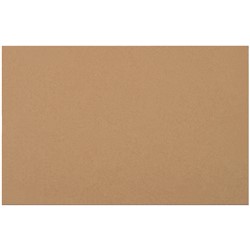
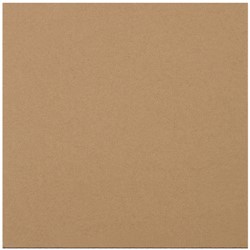
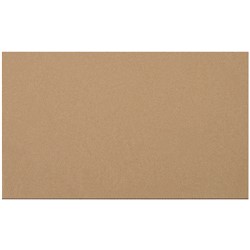
Corrugated Layer Pads for Separation and Carton Reinforcement
Corrugated layer pads are compact pre-cut kraft separators used between products, at the top or bottom of a carton and within small palletized arrangements. The available fiberboard pads use a documented single-wall construction in many fractional and whole-inch footprints. Select them around the inside pack dimensions and support needed at each layer.
Size the Pad to the Inside Pack
Measure the usable inside length and width of the carton after accounting for liners, partitions and product clearances. A pad should sit flat without buckling against the sidewalls. When it separates rows or layers, make sure the footprint covers the intended contact points and does not leave product edges unsupported or permit small items to migrate around the perimeter.
For larger pallet and surface-covering formats, compare corrugated sheets. A small layer pad is useful for package-level organization and reinforcement, but it should not be treated as a substitute for a larger panel when the load needs broad, continuous support.
Use Pads to Support a Defined Packing Pattern
Place pads squarely between compatible layers and keep the product arrangement consistent. Flat surfaces distribute contact more evenly than narrow feet, caps or corners. If a product can roll, tip or puncture the board, use partitions, cushioning or other retention designed for that movement rather than relying on a flat pad alone.
The pad's board description does not provide a universal compression, stacking or weight rating for the finished carton. Humidity, storage duration, repeated handling and concentrated loads can reduce performance. Validate the completed package with the actual product and closure, and replace pads that are crushed, wet, torn or contaminated before another packing cycle.
Corrugated Layer Pads FAQs
What is a corrugated layer pad used for?
It can separate product layers, cover contact points and reinforce the top or bottom of a compatible pack.
Should the pad fit tightly inside the box?
It should lie flat with suitable clearance rather than bowing or damaging the carton walls.
Does a layer pad stop products from moving?
Not by itself. Use retention or cushioning when the product can slide, roll, tip or puncture.
Can I reuse a corrugated layer pad?
Only when it remains dry, clean, flat and suitable for the next load and application.
Need Help Choosing Corrugated Layer Pads?
Packaging HERO can help you match pad dimensions, product layers, carton fit and reinforcement needs.
Contact Packaging HERO
.webp)