.webp)
Wholesale Waste Labels
| Image | SKU | Dimensions | Color/Print | Labels/Roll |
|
Add To Cart | ||||
|---|---|---|---|---|---|---|---|---|---|---|

|
PH-413011 | 6" x 6" | "Hazardous Waste - California" | 500 |
|
|
||||

|
PH-413023 | 6" x 6" | "Hazardous Waste - New Jersey" | 500 |
|
|
||||

|
PH-413035 | 6" x 6" | "Hazardous Waste - Standard" | 500 |
|
|
||||

|
PH-413047 | 6" x 6" | "Non-Hazardous Waste" | 500 |
|
|
||||

|
PH-413057 | 6" x 6" | "Universal Waste" | 500 |
|
|
||||

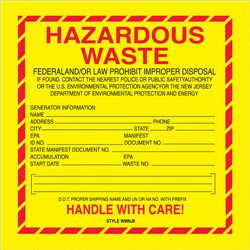
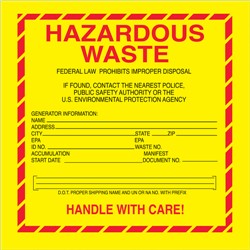
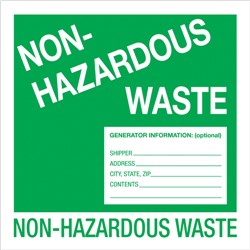
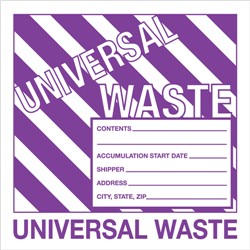
Packaging HERO offers hazardous-waste, universal-waste and non-hazardous-waste labels, including state-specific formats for California and New Jersey. Choose the label from the waste program and jurisdiction that actually apply to the container. Waste labels use prominent formats that leave room for clear identification and, where applicable, information completed as part of the facility's waste-management process. Hazardous waste, non-hazardous waste and universal waste are different classifications or management categories. The correct label starts with the facility's waste determination and the federal, state and local rules that apply—not with the color or wording of a stock sticker. For universal waste, EPA rules can require identification of the specific waste type and a method for demonstrating accumulation time. A general Universal Waste label may therefore be only one part of the facility's labeling and recordkeeping process. Yes. They are separate stock products intended for state-specific waste-labeling workflows. No. The waste determination should be made first; the label identifies the container after that determination. Not necessarily. The applicable program may require the waste type, accumulation date or other information in addition to a general Universal Waste identification. No. They are one part of container identification; accumulation, storage, dating, recordkeeping and other requirements may also apply. We can help you locate the California, New Jersey, standard hazardous-waste, non-hazardous or universal-waste format you have determined is appropriate.Hazardous, Universal & Non-Hazardous Waste Labels
Waste Labels Serve Different Programs
Label
Best Fit
What to Confirm
Hazardous Waste - California
California hazardous-waste identification workflows
California-specific container and accumulation requirements for the waste and facility.
Hazardous Waste - New Jersey
New Jersey hazardous-waste identification workflows
New Jersey-specific requirements and any information that must be completed on the label.
Hazardous Waste - Standard
General hazardous-waste container identification
Federal, state and facility requirements that apply to the waste and accumulation area.
Non-Hazardous Waste
Waste streams that have been determined to be non-hazardous
The actual waste determination; the sticker itself does not classify the material.
Universal Waste
Universal-waste programs
The specific universal-waste type, accumulation tracking and any additional wording or dating required.
A Waste Label Identifies the Container; It Does Not Make the Waste Determination
Frequently Asked Questions
Are California and New Jersey labels different from the standard label?
Does a Non-Hazardous Waste label determine that the material is non-hazardous?
Can a Universal Waste label be used for every universal-waste situation by itself?
Do these labels replace hazardous-waste management requirements?
Need a Specific Waste-Container Label?
