.webp)
Industrial Loosefill
| Image | SKU | Description | Size | Each/Each |
|
Add To Cart | |||||||
|---|---|---|---|---|---|---|---|---|---|---|---|---|---|

|
PH-551101 | Starch-Based, Anti-Static | 7 Cu. Ft. | 1 |
|
|
|||||||

|
PH-551103 | Pink Polystyrene, Anti-Static | 7 Cu. Ft. | 1 |
|
|
|||||||

|
PH-551105 | White Polystyrene | 7 Cu. Ft. | 1 |
|
|
|||||||

|
PH-551107 | Starch-Based, Anti-Static | 12 Cu. Ft. | 1 |
|
|
|||||||

|
PH-551111 | Pink Polystyrene, Anti-Static | 20 Cu. Ft. | 1 |
|
|
|||||||

|
PH-551113 | White Polystyrene | 20 Cu. Ft. | 1 |
|
|
|||||||
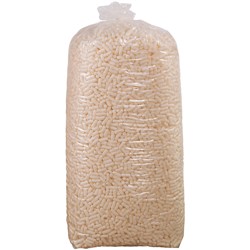


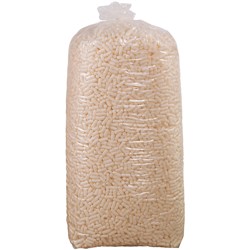
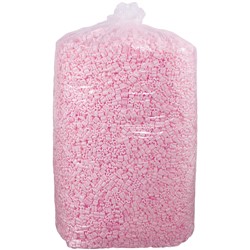
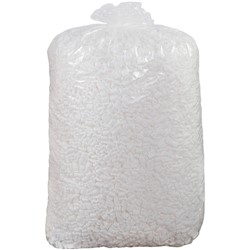
Industrial loose fill flows around irregular shapes and helps keep products separated from each other and the carton walls. Material choice matters when the shipment involves static-sensitive parts, humid storage, disposal requirements or loads that may settle during distribution. Lay down a base layer, center the product and fill all side spaces before covering the top. The closed box should gently restrain the fill without forcing pressure onto a delicate item. Large voids consume more material and allow greater migration, so reducing carton dimensions can improve both protection and packing efficiency. Dense products can work through loose material during vibration. Test the packed carton under representative handling conditions and switch to fixed cushioning when movement, settling or concentrated loads remain a concern. For electronics, verify electrical properties, protection duration and the complete ESD packaging design; color alone does not prove performance. Store starch-based fill away from moisture and follow the exact product's end-of-life guidance. Anti-static fill is formulated to reduce charge generation; standard fill is intended for general cushioning. Do not rely on color alone. Confirm the electrical specifications and stated protection period for the exact product. Some products disintegrate or dissolve, but handling and disposal directions vary. Follow the supplier's instructions and local requirements. Use a better-fitted carton, standardize packing depth and meter material consistently at the station. We can help compare material behavior, static-control needs and cushioning requirements.Industrial Loose Fill for Void Filling and Product Separation
Compare Loose-Fill Materials
Material
Good fit
Important limitation
Standard polystyrene
General lightweight cushioning and high-volume packing
Not intended as ESD protection
Anti-static polystyrene
Reducing charge generation around static-sensitive goods
Anti-static performance is not shielding
Starch-based anti-static
Operations prioritizing plant-starch material and static control
Moisture sensitivity and disposal options require review
Control Movement Through the Whole Carton
Frequently Asked Questions
What is the difference between standard and anti-static loose fill?
Is pink loose fill always anti-static?
Does starch-based fill dissolve in water?
How can I reduce loose-fill consumption?
Need the Right Fill for Your Products?
