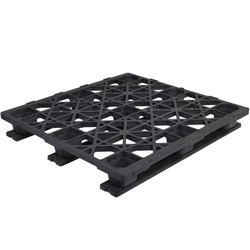
Plastic Pallets for Reusable Unit Loads
Plastic pallets provide consistent reusable platforms for shipping, storage and material handling. Economy, industrial, heavy-duty, closed-deck and rackable designs differ in construction, support conditions and load ratings, so choose by the entire application—not footprint alone.
Static, Dynamic and Rack Ratings Describe Different Conditions
Static capacity applies when a pallet rests on an appropriate level surface. Dynamic capacity applies while a compatible forklift or pallet jack is moving the load. Rack capacity depends on how the pallet spans and is supported by the rack. These values are not interchangeable.
Confirm the rating for the exact SKU, load distribution and support arrangement. Concentrated weight, point loading, impact, unsupported spans and temperature can affect performance even when total load weight appears to be within a published number.
A pallet described as rackable must still be matched to the rack configuration, beam spacing, load and operating conditions. Do not place a plastic pallet in unsupported racking based only on its static or dynamic rating.
Choose Construction Around the Handling Cycle
Economy and nestable designs can reduce empty-storage and return-shipping space when the pallets fit together after unloading. Industrial and heavy-duty styles support more demanding reuse cycles. Closed decks provide a more continuous top surface, which may suit loads that need support beneath smaller packages or containers.
Verify footprint, overall height, fork-entry clearance, pallet-jack compatibility, conveyor interfaces and any stacking requirement. Also check that the deck surface and load-control method work with the cartons, bags, drums or containers being unitized.
If new or recycled construction, repairability or a specified heat-treated wood format is the better fit, compare Wooden Pallets.
Frequently Asked Questions
What is the difference between static and dynamic capacity?
Static capacity applies to a stationary, properly supported pallet; dynamic capacity applies while the pallet and load are being handled.
Can any plastic pallet be stored in a rack?
No. Use only a pallet with a suitable rating for the exact rack support, load and operating conditions.
Why choose a nestable pallet?
Nestable pallets fit into one another when empty, helping reduce storage and return-shipping volume.
When is a closed deck useful?
A closed deck offers a more continuous top surface for loads that need broader bottom support, subject to the pallet’s other application limits.
Need Help Matching a Plastic Pallet to Your Application?
Share the load, support, handling equipment, storage and return cycle.
Contact Packaging HERO
.webp)