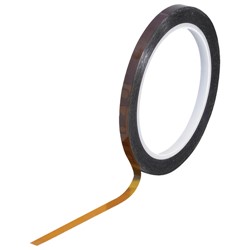
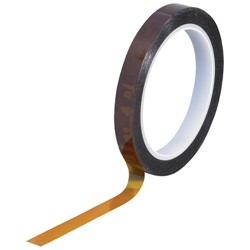
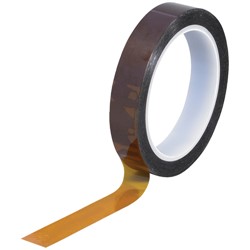
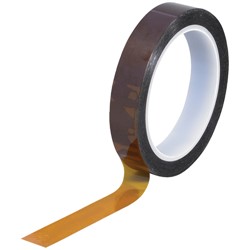
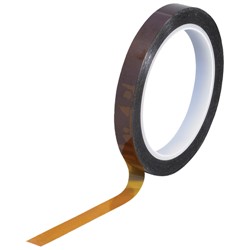
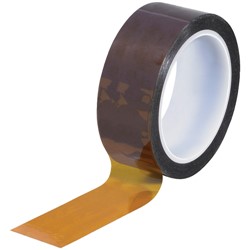
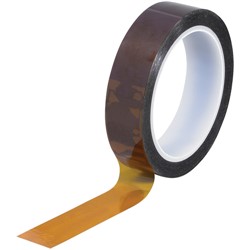
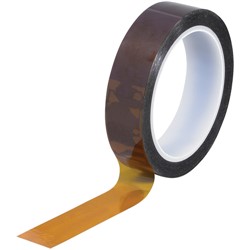
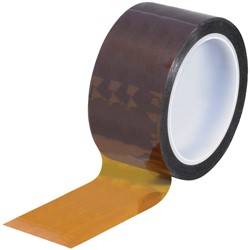
Kapton® Polyimide Tape for Thin High-Temperature Masking
Kapton® tape uses a thin amber polyimide film with a pressure-sensitive adhesive for precision masking, electrical insulation and temporary protection during heat-intensive processes. Its low-profile construction helps cover narrow areas and irregular components without the bulk of a reinforced cloth tape.
Separate Film Thickness From Total Thickness
Film thickness describes the polyimide backing; total thickness also includes adhesive. A thinner film can follow tight contours and leave a smaller step at a masked edge, while a heavier film can be easier to handle and may add puncture resistance. Choose width for the area being protected, allowing enough coverage for placement tolerance without masking nearby contacts, traces or coating surfaces.
Polyimide is valued for heat resistance and electrical applications, but the tape’s complete performance comes from the film, adhesive and process together. Compare the exact operating and application temperatures, dielectric data, adhesion, tensile strength, elongation, chemical exposure and removal guidance. A temperature maximum does not describe allowable dwell time or guarantee residue-free removal on every substrate.
Plan Masking and Removal as One Process
Apply to a clean, dry surface with even pressure, especially around edges and changes in contour. Avoid excessive stretching because the tape can recover after placement and pull away from corners. For coating or soldering work, test whether the tape blocks the process material without allowing bleed, edge lift or adhesive transfer.
Removal behavior changes with substrate, temperature, dwell and cooling. Establish the best removal temperature and pull angle during a trial. For repeated circular masks, precut Kapton® discs can reduce cutting time and improve placement consistency.
Frequently Asked Questions
Is film thickness the same as total tape thickness?
No. Total thickness includes both the polyimide film and the adhesive layer.
Will Kapton® tape always remove without residue?
Removal depends on the exact tape, substrate, heat exposure, dwell time and removal method, so test the complete process.
Can I choose tape from temperature alone?
No. Also compare exposure time, electrical requirements, chemical contact, adhesion, geometry and removal expectations.
When are precut discs more efficient than rolls?
Discs are useful for repeated masking of similarly sized circular points where manual cutting would slow production or reduce consistency.
Need Polyimide Tape for a Defined Process?
We can help compare film thickness, width and process requirements without overgeneralizing temperature or removal performance.
Contact Packaging HERO
.webp)