.webp)
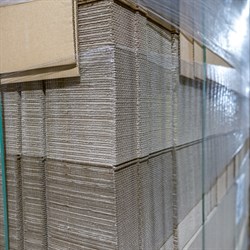 Bulk Corrugated Discount
Corrugated Boxes and Cardboard for Packaging and More
-
Bulk Corrugated Discount
-
 Most Popular Boxes
-
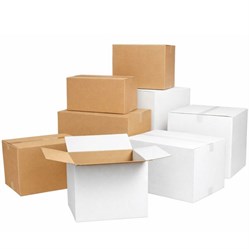 Stock Boxes
-
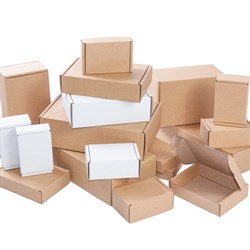 Corrugated Mailers
-
 Long Corrugated Boxes
-
 Tall Corrugated Boxes
-
 Flat Boxes
-
 Cube Boxes
-
 Sheets & Pads
-
 Heavy-Duty Boxes
-
 White Boxes
-
 Multi-Depth Boxes
-
 Printer's Boxes
-
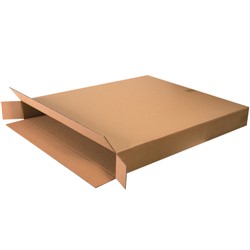 Side Loading
-
 Moving Boxes and Supplies
-
 File Storage Boxes
-
 Telescopic Boxes
-
 Bulk Cargo Boxes
-
 Specialty Boxes
-
 Corrugated Trays
-
 Corrugated Totes
-
 Corrugated Bins
-
 Corrugated Trash Cans
-
 Corrugated Overstock
No Result Found

Search by Size:
No Result Found
Corrugated packaging spans standard shipping cartons, mailers, sheets and pads, storage bins, bulk containers and purpose-built specialty formats. The right family depends on what the package must do—contain a product, control movement, separate layers, support warehouse picking or handle a large palletized load. Start with the application before narrowing by dimensions. Use regular slotted shipping boxes for broad carton needs, mailers for presentation or side-loading access, and sheets or pads for separation and surface protection. Corrugated bins support open-front inventory access, while bulk cargo and specialty boxes address larger loads or defined protection systems. Measure the product after adding every inner pack, then consider loading direction, unpacking, labeling, palletization and storage. A cube, long, tall, flat, multi-depth or telescoping format can solve a different geometric problem. Choosing a familiar carton style first can create avoidable empty space, poor access or unsupported product movement. Match single-, double- or other documented wall construction and strength to the contents and distribution cycle. Control concentrated loads, empty space, closure and pallet support. ECT or burst-strength descriptions distinguish board performance under defined tests but do not create a universal safe weight, stack height or reuse period. Validate representative completed packages with the actual product, cushioning, tape and route. Moisture, temperature, storage duration and repeated handling can change corrugated performance. Food contact, weather resistance, hazardous-material authorization and sustainability claims also remain product-specific; do not extend them across the entire corrugated family. Start with the product, loading method, protection needs, distribution route and storage workflow. No. Evaluate the complete box, contents, closure, support and conditions. A mailer may suit presentation, side loading or a specialized opening and retention method. No. Verify product-specific materials, treatments, contamination controls and documentation. Packaging HERO can help you compare corrugated formats, dimensions, board construction and packing requirements.
Corrugated Boxes and Components for Shipping, Storage and Handling
Choose the Format Before the Exact Size
Evaluate Board as Part of the Complete Package
Corrugated Family Guide
Family
Primary Use
Key Decision
Shipping boxes
General containment and distribution
Product fit, board and closure
Mailers
Presentation or specialized loading
Opening style and product retention
Sheets and pads
Layering, separation or surface protection
Material, flute and dimensions
Bins and bulk boxes
Warehouse access or large-volume loads
Shelf/pallet fit and supported load
Corrugated Packaging FAQs
Where should I begin when choosing corrugated packaging?
Does ECT establish a maximum packed weight?
When is a mailer better than an RSC?
Are all corrugated products recyclable or food-contact suitable?
Need Help Choosing Corrugated Packaging?
