.webp)
 Bubble Products
Cushioning and Void Fill Packing Products
-
Bubble Products
-
 Foam Products
-
 Kraft Paper
-
 Loosefill
-
 Cushion Pads
-
 VCI Paper
-
 Vermiculite
No Result Found
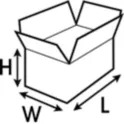
Search by Size:
No Result Found
Protective packaging works best when each material has a defined job. Cushioning absorbs and spreads impact, surface protection limits rubbing and scuffing, and void fill reduces movement inside the shipping case. Many shipments need more than one of these functions. Begin with product weight, fragility, shape and finish. Wrap or separate surfaces first, then use the outer carton and void fill to control movement. Heavy items can migrate through loose material, while sharp corners may puncture a soft wrap; both conditions call for stronger blocking, edge protection or a more structured cushion. Package dimensions matter as much as material choice. Too little clearance limits cushioning space, while an oversized case consumes more fill and may permit movement. For repeat shipments, test the complete packed case under conditions that reflect handling, stacking and the distribution route. Not exactly. Cushioning manages shock around the product; void fill occupies open space to reduce movement. Leave enough clearance for the selected cushion to work without allowing the product to shift excessively. Use a clean, nonabrasive interleaving or wrap material and keep rough blocking materials from direct contact. Yes. Testing the product, cushion, closure and carton together is the best way to validate a repeatable pack. We can help compare cushioning, surface-protection and void-fill options for your product and packing process.
Product Cushioning and Void Fill for Safer Shipping
Match the Material to the Hazard
Packaging family
Best suited to
Important buying decision
Air bubble
Conforming wrap, impact cushioning and light void fill
Cell height, roll width and perforation
Foam
Nonabrasive separation, wrapping and surface protection
Thickness and format
Kraft and honeycomb paper
Blocking, bracing, wrapping and presentation
Manual versus dispenser-assisted packing
Loose fill and absorbent fill
Irregular voids or application-specific containment
Settling, cleanup and material compatibility
Design the Pack as a System
Frequently Asked Questions
Are cushioning and void fill the same?
How much empty space should I leave around an item?
What protects polished or painted surfaces?
Should a finished pack be tested?
Need a More Reliable Protective Pack?
