.webp)




How To Measure a Corrugated Box
When it comes to packing items for shipping, box size matters from individual orders sent to large-scale warehouse operations. A box that’s too small likely won’t fit the item and essential packing materials and may even damage what’s inside. Something too large causes said item to slide around or results in wasted packing supplies. On top of this, dimensions and cubic inches influence what you’ll pay for shipping rates.
Going beyond, a box’s dimensions influence the amount of cardboard, energy and costs needed to construct it, and how much space and subsequent expense it takes up in shipping and in a warehouse.
For a more efficient and precise experience, understand how to measure a box for shipping:
Where to Measure the Box
This might seem obvious — or is it? All boxes have interior and exterior dimensions. The thicker the box’s material, the greater the difference between these figures.
Generally, shipping companies expect you to measure the box from the exterior. Then, measure the interior dimensions to ensure you have enough space for whatever you intend to ship — items and all necessary packaging materials — and to keep contents safe.
How to Measure the Dimensions of a Box
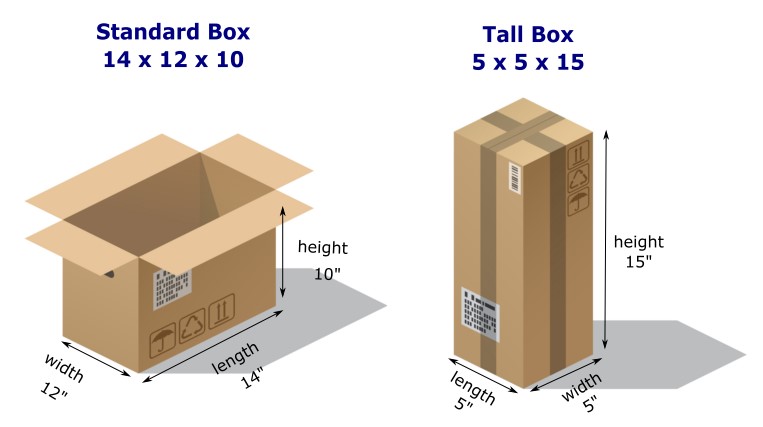
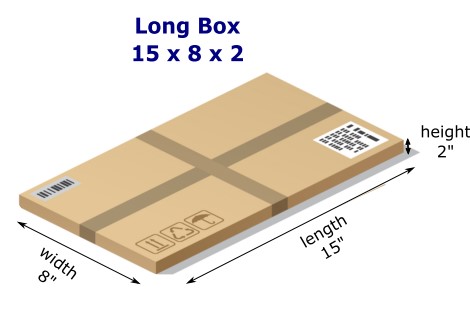
Dimensions for corrugated shipping boxes use the following format: length (L) x width (W) x height (H). For these dimensions:
· Length pertains to the longest side or portion of the base as you’re viewing the box from above.
· Width applies to the shortest side or portion of the base.
· Depth or height applies to how tall the box is, measured along the side running perpendicular to the base. Realize that for upward facing and tall boxes, height or depth will be the longest dimension.
To get figures for all sides, start with the length, turn the box 90 degrees for the width and then measure the box top to bottom with all flaps closed. Exactness for these dimensions should be within an eighth of an inch.
After measuring the exterior, do the same steps to calculate the box’s interior dimensions.
Calculating Volume and Dimensional Weight
Exterior dimensions ultimately tell a shipping company how much room a box will take up once packed into a truck and later kept in a warehouse. Yet, realize that the price of freight is based on the package’s absolute weight or dimensional weight. The greatest amount determines what you’ll pay. A too-large box can result in you paying extra to ship your package.
Then, the volume you calculate further helps determine if your item and packing materials will fit.
To calculate the volume, multiply the length by the width by the height. This will give you a number in cubic inches. Then, to determine the dimensional weight, divide the cubic inches by the shipping carrier’s divisor value.
Whether you’re doing one-off packages, or your small- to medium-sized business frequently ships goods to clients and customers, collaborate with Packaging HERO® to streamline your operations. Along with corrugated boxes, shipping and packaging supplies, we offer the option of taking out warehouse space and can develop a custom, personalized solution in line with your goals. Sign up today to begin ordering shipping supplies or contact our team to learn more about what we can do.