.webp)
Palletizing & Load Securement Supplies
Choose stretch film, strapping, edge protection, pallet covers, and related materials according to the load failure you need to prevent. The right combination helps keep products together, protect carton edges, and reduce exposure during storage and freight handling.
Already dealing with recurring load or package failures? Use the Packaging Damage Troubleshooting Guide to work backward from symptoms such as crushed cartons, punctures, product movement, seal failures or unstable pallet loads before changing materials.
For warehouse teams, distribution centers, manufacturers, and multi-location operations nationwide.
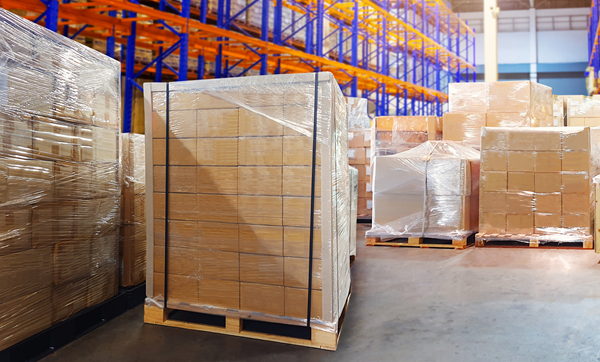
Select Supplies by the Job They Need to Do
A pallet can fail in more than one way. Cartons may slide between layers, edges may crush under tension, a load may separate from the pallet, or products may be exposed to dust and moisture. No single material corrects every failure. Start with the load, handling environment, equipment, and shipping lane; then choose the materials that address the specific risks.
This page helps you choose the supply families. For the actual process of building, containing, checking, and documenting a pallet, use our palletizing best-practices guide.
This page helps you choose the supply families. For the actual process of building, containing, checking, and documenting a pallet, use our palletizing best-practices guide.
Choose by Load Problem
Cartons Move as One Group, but the Load Shifts
Start with: stretch film selected for the load weight, shape, application method, and required containment. Also confirm the load is connected to the pallet rather than wrapped only around the cartons.
Carton Corners Crush or Straps Cut Into the Load
Start with: edge protectors that distribute film or strap pressure and reinforce vulnerable corners. Also review carton strength, stacking alignment, and applied tension.
Heavy or Rigid Products Separate During Handling
Consider: strapping and the correct seals, buckles, tools, or equipment. Strapping type and tension must match the product, load, handling method, and required retained tension.
Layers Slide or the Load Has an Uneven Surface
Consider: layer pads, anti-slip materials, edge protection, or a revised stacking pattern. Adding film alone may not correct movement occurring inside the load.
Products Need Dust or Moisture Protection
Consider: pallet covers, top sheeting, or poly sheeting selected for the exposure and required coverage. These protect the load surface but do not replace structural containment.
Results Vary by Operator, Shift, or Location
Review: film and equipment compatibility, application settings, written work instructions, operator training, and replenishment standards. Product consistency and process consistency work together.
Core Palletizing & Load Securement Supplies
Stretch Film
Hand and machine films unitize pallet loads. Selection should account for load profile, weight, sharp edges, pre-stretch capability, application equipment, and the containment force the load needs.
Strapping & Tools
Polypropylene, polyester, steel, and cord strapping serve different load and handling requirements. A complete setup may also require compatible seals, buckles, tensioners, sealers, cutters, or automated equipment.
Edge Protectors
Edge protection can reinforce corners, improve vertical alignment, distribute strap pressure, and reduce damage caused by concentrated film tension.
Pallet Covers & Sheeting
Gusseted pallet covers, top sheets, and poly sheeting help protect products from dust, dirt, and limited environmental exposure during storage or handling.
Layer Pads & Slip Control
Corrugated or paperboard layer pads can separate tiers, distribute weight, and create a more consistent surface. Anti-slip materials may help when movement occurs between layers.
Accessories & Application Equipment
Dispensers, film carriages, turntables, strapping tools, corner applicators, and related equipment influence how consistently the selected material is applied.
Information Needed to Recommend the Right Setup
A useful recommendation starts with more than pallet dimensions. Be prepared to share:
• Loaded pallet dimensions and total weight
• Carton sizes, board strength, and whether the load is uniform or mixed
• Product characteristics, including sharp edges, settling, or moisture sensitivity
• Current film, strapping, edge protection, tools, and equipment
• Pallets wrapped per shift and the number of operators or locations
• Shipping method, handling points, storage conditions, and known damage patterns
• Customer, carrier, facility, or equipment limits that must be met
This information helps separate a material problem from a pallet-build, equipment-setting, or training problem.
• Loaded pallet dimensions and total weight
• Carton sizes, board strength, and whether the load is uniform or mixed
• Product characteristics, including sharp edges, settling, or moisture sensitivity
• Current film, strapping, edge protection, tools, and equipment
• Pallets wrapped per shift and the number of operators or locations
• Shipping method, handling points, storage conditions, and known damage patterns
• Customer, carrier, facility, or equipment limits that must be met
This information helps separate a material problem from a pallet-build, equipment-setting, or training problem.
Hand Application or Machine Application?
Hand-Applied Materials
Hand film and manual strapping tools offer flexibility for lower volumes, varied loads, temporary stations, and operations where automation is not practical. Results depend heavily on material selection, dispenser condition, operator method, and training.
Machine-Applied Materials
Machine film and automated strapping can improve repeatability at higher throughput. The material must be compatible with the equipment, settings, load profile, and production speed; changing film or strap without reviewing those inputs can change performance.
For a deeper comparison of film construction, gauges, application methods, and usage, visit the Stretch Film Guide.
Standardization, Bulk Programs & Replenishment
Once a load-securement setup is validated, standardizing approved products can reduce variation across operators and locations. Packaging HERO can help consolidate related supplies, plan purchasing around usage, and support scheduled replenishment for qualifying programs.
Standardization should preserve documented exceptions. A stable uniform pallet may not need the same materials as an irregular, heavy, or exposure-sensitive load.
Standardization should preserve documented exceptions. A stable uniform pallet may not need the same materials as an irregular, heavy, or exposure-sensitive load.
Palletizing & Load Securement FAQs
What are palletizing and load-securement supplies?
They include stretch film, strapping, edge protectors, pallet covers, layer pads, and compatible tools or equipment used to unitize, reinforce, or protect palletized products.
Is more stretch film always the answer to load shifting?
No. Movement can originate in the pallet build, between layers, at crushed carton corners, or where the load is not secured to the pallet. Identify the failure before increasing film.
When should edge protectors be considered?
Consider them when corners crush, straps concentrate pressure, tall loads need added vertical alignment, or film tension deforms the outer cartons. The protector size and strength should match the load.
Does strapping replace stretch film?
Not automatically. Strapping provides concentrated securement, while stretch film can unitize the load and contain individual cartons. Some loads use one; others require a tested combination.
Do pallet covers secure a load?
Pallet covers primarily protect against dust, dirt, and limited exposure. Unless specifically designed and validated for containment, they should not be treated as a substitute for stretch film or strapping.
Can Packaging HERO help standardize multiple locations?
Yes. Packaging HERO can help review current materials, identify unnecessary variation, support approved-product lists, and plan replenishment around the needs of each operation.
Not sure which part of the load-securement system needs to change? Share the pallet profile, current materials, equipment, shipping lane, and failure you are seeing. We can help narrow the options.
